The Political Landscape of Maldives: Recent Elections and Their Implications
The Maldives, a small archipelago nation in the Indian Ocean, has often been the subject of geopolitical interest due to its strategic location. Over the years, the country's political landscape has undergone significant transformations, characterized by a transition from autocratic rule to a multi- party democratic system. In recent years, the political scene in the Maldives has been highly dynamic, with several significant electoral events, shifts in power, and geopolitical ramifications that have implications for both domestic governance and international relations. This article will explore the political landscape of the Maldives, focusing on the recent elections, the key players, the factors shaping electoral outcomes, and the implications for the country's future.
1. Historical Context: The Road to Democracy
For much of its modern history, the Maldives was ruled by autocratic regimes. Maumoon Abdul Gayoom, the longest-serving leader of the Maldives, governed the country from 1978 to 2008. Under his rule, the Maldives was effectively a one-party state with limited space for political opposition, media freedom, or civil liberties.
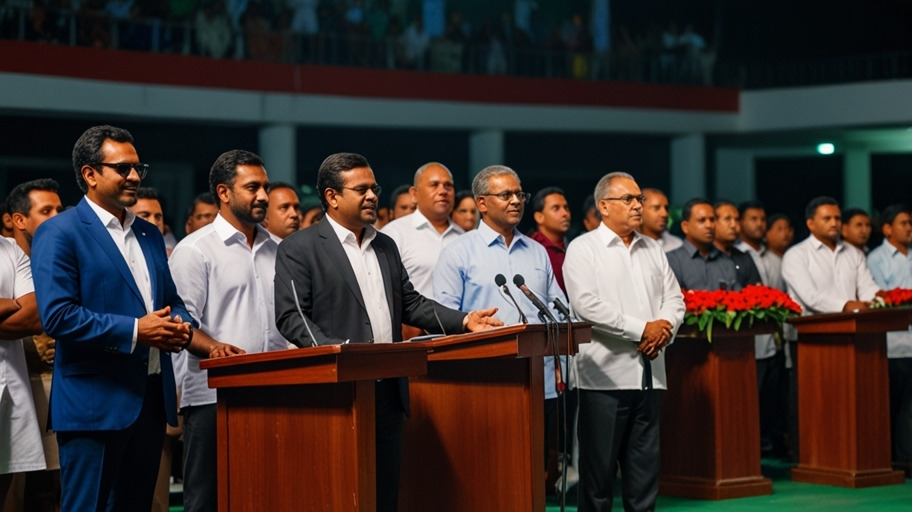
The shift toward democracy began in the early 2000s, driven by domestic and international pressures. After a series of protests and reforms, the first multi-party elections were held in 2008, marking a significant turning point in the Maldives' political history. Mohamed Nasheed , a human rights activist and former political prisoner, won the presidency, the first democratically elected leader of the Maldives. Nasheed's administration focused on democratic reforms, environmental sustainability, and addressing the climate crisis, but his tenure was cut short by a controversial resignation in 2012, which many believe was forced by a coup.
The years that were followed were marked by political instability, with successive governments grappling with internal conflicts, economic challenges, and balancing external influences, particularly from India and China. Elections in 2013 saw Abdulla Yameen, the half-brother of Gayoom, rise to power. Yameen's presidency was characterized by allegations of corruption, suppression of dissent, and a shift towards authoritarianism, but it also survived a massive infrastructural push, much of it financed by Chinese investments.
2. The 2018 Election: A Democratic Resurgence
The 2018 presidential election was one of the most significant electoral events in the Maldives' recent political history. The election was seen as a litmus test for the country's democratic institutions after years of political turmoil under Yameen's rule. Despite expectations that Yameen would retain power through Alleged manipulation of the electoral process, the election supporters a major upset.
Ibrahim Mohamed Solih, the candidate from the Maldivian Democratic Party (MDP), unexpectedly defeated Yameen. Solih's victory was widely regarded as a win for democracy, with many observers praising the peaceful transfer of power. His administration promised to restore democratic values, improve governance , and reduce corruption, while also recalibrating the Maldives' foreign policy, especially its relationships with major powers like India and China.
Solih's foreign policy took a sharp turn from his predecessor's. While Yameen had cultivated close ties with China, particularly through the Belt and Road Initiative (BRI), Solih leaned more toward India, aligning with the 'India First' policy that emphasized close ties with New Delhi. This realignment was largely seen as a response to concerns about debt dependency on China, as well as India's historical influence over the Maldives.
3. The 2023 Presidential Election: Shifts and Surprises
The 2023 presidential election in the Maldives was another closely watched political event, with both domestic and international observers paying close attention to the outcomes. The main contenders in this election were incumbent President Ibrahim Mohamed Solih, seeking a second term, and Mohamed Muizzu, representing the Progressive Party of Maldives (PPM), backed by former president Abdulla Yameen.
This election was particularly significant for several reasons. First, it was seen as a referendum on Solih's administration and its ability to deliver on promises of economic growth, political reform, and environmental sustainability. Second, the election was framed by broader geopolitical dynamics, with India's influence and China's presence looming large over the political discourse. Muizzu, like Yameen, has been a strong advocate of closer ties with China, advocating for more independence from India's influence.
The 2023 election witnessed a highly competitive and polarized campaign. While Solih highlighted his administration's achievements in restoring democratic governance, improving infrastructure, and fostering closer ties with India, Muizzu capitalized on dissatisfaction with economic stagnation, rising living costs, and the perception that the Maldives was becoming overly reliant on India.
On election day, results showed that the electorate was deeply divided. Although Solih had a strong support base in urban areas, particularly in the capital Malé, Muizzu garnered significant support in rural and less developed atolls, where voters felt disconnected from the benefits of economic development. In the end, Muizzu emerged as the victor, signaling a potential shift in the Maldives' political direction once again.
4. Key Factors Shaping the Elections
a) Economic Concerns
The Maldives' economy is heavily reliant on tourism, which accounts for a large portion of its GDP. However, the country faced severe economic challenges during the COVID-19 pandemic, as global travel restrictions led to a sharp decline in tourist arrivals. While the The tourism industry began to recover in 2021 and 2022, many Maldivians still felt the economic impact of the pandemic in the 2023 election.
Unemployment, inflation, and the rising cost of living were key concerns for voters, particularly in the more remote atolls where economic opportunities are limited. While Solih's administration had initiated several economic recovery programs, including infrastructure projects funded by foreign investments, many voters felt that the benefits were not reaching them. Muizzu's campaign effectively tapped into these economic grievances, positioning him as a candidate who could bring about a more equitable distribution of resources.
b) Foreign Policy and Geopolitical Influence
The Maldives' strategic location in the Indian Ocean has made it a focal point for geopolitical competition between India and China. During Yameen's presidency, the Maldives became increasingly aligned with China, securing significant Chinese investments for infrastructure projects. However, critics argued that these projects led to unsustainable levels of debt and eroded the Maldives' sovereignty.
Under Solih, the Maldives pivoted back toward India, adopting an 'India First' policy that sought to strengthen diplomatic and economic ties with New Delhi. This move was supported by those who saw India as a more reliable and less intrusive partner, but it also fueled nationalist sentiments among those who believed that the Maldives was overly dependent on its northern neighbor. Muizzu's pro-China stance appealed to voters who were skeptical of India's growing influence in the country.
c) Environmental Concerns
The Maldives is one of the countries most vulnerable to climate change, with rising sea levels posing an existential threat to the low-lying islands. Environmental issues have been central to Maldivian politics for decades, and the country's leaders have often played a prominent role in international climate discussions.
Solih's administration continued to prioritize climate action, advocating for stronger global commitments to reduce carbon emissions and promoting sustainable tourism practices. However, the immediate economic challenges faced by many Maldivians may have overshadowed environmental concerns in the 2023 election. While climate change remains a critical issue for the country, it did not feature as prominently in the electoral discourse as economic and foreign policy issues.
d) Political Fragmentation
The Maldivian political landscape is characterized by a high degree of fragmentation, with multiple parties vying for power and alliances shifting frequently. In the lead-up to the 2023 election, Solih faced internal challenges within his own party, the MDP, particularly from former President Nasheed, who had grown increasingly critical of Solih's leadership. Nasheed's decision to form a breakaway faction of the MDP and contest the election as a separate candidate weakened Solih's electoral candidate and may have contributed to his eventual defeat.
The opposition, on the other hand, managed to consolidate its support base under Muizzu, uniting former Yameen loyalists and other factions opposed to Solih's administration. This unity within the opposition, combined with Solih's internal party challenges, played a decisive role in the election's outcome .
5. Implications for the Maldives
a) Domestic Governance
Muizzu's victory in the 2023 presidential election marks a potential shift in the Maldives' political trajectory. His administration is likely to prioritize economic development, particularly in the more remote and underdeveloped parts of the country, which could address some of the grievances that shaped the electoral outcome. However, managing the country's complex political landscape, characterized by internal divisions and competing interests, will be a significant challenge for Muizzu.
Furthermore, the return to power of a pro-China administration may raise concerns about Democratic backsliding, as Muizzu is closely associated with Yameen's authoritarian tendencies. The extent to which Muizzu will maintain democratic norms and institutions remains to be seen, but there are fears that his administration could revert to the more autocratic practices of the past.
b) Foreign Relations
Muizzu's election is likely to have significant implications for the Maldives' foreign policy, particularly its relationships with India and China. While the 'India First' policy may not be entirely abandoned, Muizzu is expected to recalibrate the Maldives' foreign policy to restore closer ties with China. This could result in renewed Chinese investments in the country, particularly in infrastructure development, but it may also exacerbate concerns about debt dependency and sovereignty.
The geopolitical competition between India and China will continue to play a crucial role in shaping the Maldives' foreign policy decisions. Muizzu will need to strike a delicate balance between maintaining strong ties with both countries while ensuring that the Maldives does not become overly reliant on either .

c) Climate Change and Sustainability
Climate change will remain an existential issue for the Maldives, regardless of the political leadership. While the immediate focus of Muizzu's administration may be on addressing economic challenges, it will need to continue advocating for stronger global climate action and implementing sustainable policies at home. Maldives' future depends on its ability to navigate the complex interplay between economic development, environmental sustainability, and international cooperation.
Conclusion
The recent coming elections in the Maldives have highlighted the country's political volatility and the complex interplay of domestic and international factors shaping its future. As Mohamed Muizzu takes the reins of power, the Maldives faces both significant challenges and opportunities. The years will be crucial in determining whether the country can maintain its democratic institutions, address economic inequalities, and continue playing a pivotal role in global climate action while navigating the geopolitical dynamics of the Indian Ocean region.