Maldives' Foreign Relations: Strengthening Ties with India and China
The Maldives, a small island nation in the Indian Ocean, has attracted global attention due to its strategic geographic position, vast Exclusive Economic Zone (EEZ), and the geopolitical significance it holds. While it may seem like an idyllic paradise for tourists, its foreign relations have played a critical role in shaping its political and economic landscape. Over the years, the Maldives has skillfully balanced its relationships with two regional giants—India and China. Both nations, with their global ambitions, see the Maldives as pivotal in their regional strategies. For the Maldives, strengthening ties with both while safeguarding its own national interests presents a delicate balancing act.
This article delves into the dynamics of the Maldives' foreign relations, focusing on its engagements with India and China, and the intricate balance it has maintained in fostering positive relations with these two influential powers.
The Strategic Significance of the Maldives
The Maldives' location in the Indian Ocean gives it considerable geopolitical importance. The island nation sits astride major maritime trade routes, which carry a significant portion of global trade, including energy supplies from the Middle East to East Asia. This has made the Maldives a critical point of interest for any nation looking to project power or influence in the Indian Ocean region.
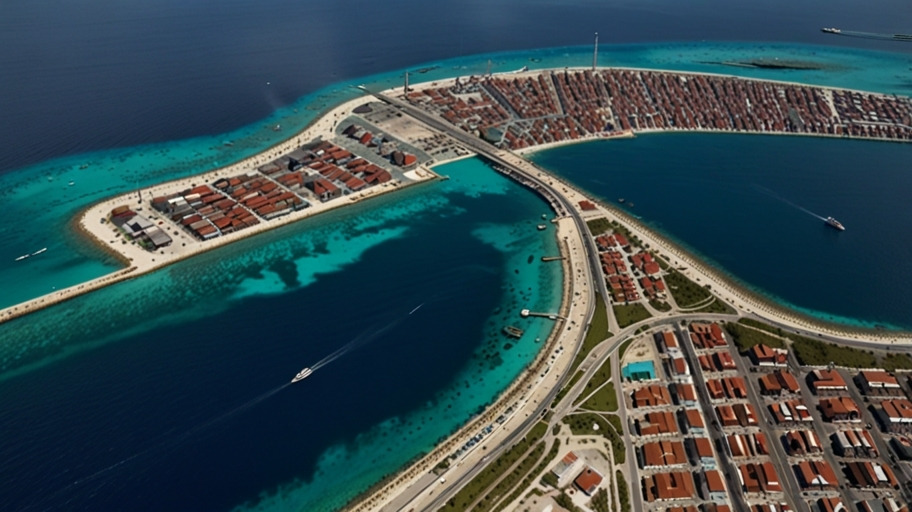
Moreover, the Maldives boasts a vast EEZ that offers potential for fisheries, undersea minerals, and other maritime resources. As nations across the world look to secure their maritime borders and resources, the strategic importance of the Maldives cannot be overstated. Given this context, it's no surprise that both India and China, with their growing global ambitions, have sought closer ties with the Maldives.
The Maldives' Historical Ties with India
India and the Maldives have shared close historical, cultural, and economic ties, dating back centuries. Both nations have common cultural roots, with links that can be traced to ancient trade routes and migration patterns. However, it was in the post-independence era of the Maldives, after 1965, that the bilateral relations between the two countries became more formalized.
India was one of the first countries to recognize the Maldives after its independence from British rule. Over the decades, India has played a critical role in supporting the Maldives' political and economic stability. From providing developmental aid to assisting in the creation of key infrastructure , India has maintained a prominent role in shaping the modern Maldives.
A significant event that cemented the ties between the two nations occurred in 1988 when India intervened in the Maldives to thwart a coup attempt against then-President Maumoon Abdul Gayoom. At the request of the Maldivian government, India launched "Operation Cactus," deploying military forces to swiftly quash the rebellion, thus ensuring the survival of Gayoom's regime. This incident demonstrated India's willingness to act as the Maldives' security guarantor and underlined the depth of their diplomatic and security relations.
India has continued to play an influential role in the Maldives' development through various initiatives such as offering scholarships, capacity-building programs, and providing technical expertise in fields like healthcare, education, and civil aviation. Additionally, India's “Neighborhood First” policy, emphasizing strong ties with South Asian neighbors, has further enhanced bilateral cooperation.
Growing Chinese Influence in the Maldives
While India's relationship with the Maldives is longstanding, China's engagement is a more recent development. China's involvement in the Maldives began to rise dramatically in the early 21st century, particularly after 2013 when President Abdulla Yameen came to power. Under Yameen's administration, the Maldives took significant steps to engage more closely with China, much to the concern of India.
China's primary interest in the Maldives revolves around its Belt and Road Initiative (BRI), an ambitious global infrastructure project aimed at enhancing connectivity between China and other countries. As part of this initiative, China has invested heavily in the Maldives, financing major infrastructure projects such as the construction of the Sinamalé Bridge (also known as the China-Maldives Friendship Bridge), which connects the capital Malé with nearby Hulhulé Island. Additionally, China has extended loans to the Maldives for airport expansions, housing projects, and port development.
Chinese investments in the Maldives are often seen as a part of China's broader strategy to enhance its influence in the Indian Ocean, a region vital to global maritime trade. By closer establishing ties with the Maldives, China aims to secure key footholds in the region, which align with its larger goal of developing strategic partnerships along critical sea routes.
However, China's growing influence in the Maldives has not been without controversy. Critics have raised concerns about the country becoming overly dependent on Chinese loans, leading to what some have termed as a potential “debt trap.” There are fears that the Maldives struggle may to repay the significant loans it has taken from China, which could result in the country ceding strategic assets, such as ports, to China, similar to what happened in Sri Lanka with the Hambantota Port.

India's Response to Chinese Inroads
As China's influence in the Maldives has grown, India has become increasingly wary of losing its dominant position in the region. Indian policymakers view the Maldives as part of India's natural sphere of influence due to its geographic proximity and historical ties. Therefore, any attempt by China to increase its footprint in the region is viewed with suspicion in New Delhi.
In response to China's growing presence, India has ramped up its engagement with the Maldives. Indian leaders have made multiple high-profile visits to the Maldives, and India has increased its economic assistance and security cooperation. In recent years, India has offered concessional lines of credit, development aid, and technical assistance to counterbalance China's investments.
Additionally, India has emphasized the importance of people-to-people ties, cultural exchanges, and capacity-building initiatives to foster goodwill between the two nations. The Indian government has also been quick to respond to crises in the Maldives, such as during the COVID-19 pandemic when India provided medical supplies, vaccines, and technical assistance to help the Maldives manage the health crisis.
The Solih Administration and Rebalancing Relations
When President Ibrahim Mohamed Solih came to power in 2018, there was a noticeable shift in the Maldives' foreign policy. Solih's administration took steps to rebalance the Maldives' relations with India and China. While maintaining strong ties with China, Solih sought to restore and strengthen the Maldives' traditional partnership with India, which had become strained under his predecessor, President Yameen.
One of Solih's first moves was to reaffirm the Maldives' commitment to its “India First” policy, emphasizing that the Maldives would prioritize relations with its closest neighbor. This move was seen as an attempt to homeless India that the Maldives would not become overly dependent on China or allow Chinese military presence in its waters.
Under Solih, India-Maldives relations have significantly improved. India has provided over $1 billion in financial assistance to the Maldives through grants, concessional loans, and investment partnerships. Moreover, both nations have signed multiple agreements to boost cooperation in areas such as defense, maritime security, disaster management, and infrastructure development.
Maritime Security and Strategic Cooperation
Given the Maldives' strategic location in the Indian Ocean, maritime security has become a key area of cooperation between India and the Maldives. India has provided the Maldivian military with training, technical assistance, and equipment to enhance its capabilities in patrolling its vast EEZ. Both countries have also conducted joint naval exercises and collaborated on initiatives to combat piracy, illegal fishing, and other maritime threats.
China, too, has expressed interest in engaging with the Maldives on maritime security. However, the Maldivian government has been cautious about allowing any significant Chinese military presence in the region, given India's sensitivities about China's involvement in the Indian Ocean.
The Maldives' Balancing Act
One of the key challenges for the Maldives in its foreign relations is balancing its ties with India and China without alienating either country. While India remains the Maldives' closest neighbor and largest provider of aid, China's economic investments are vital for the Maldives' infrastructure development and long-term growth. For Maldivian policymakers, the goal is to extract the maximum benefits from both relationships while avoiding becoming overly dependent on either nation.
This balancing act was particularly evident in the Maldives' decision to support China's BRI while also reaffirming its commitment to India's “Neighborhood First” policy. The Maldives has sought to position itself as a neutral actor, welcoming investment and cooperation from both India and China without compromising its sovereignty.
The Way Forward
As the Maldives continues to navigate its foreign relations, the future of its ties with India and China will largely depend on the domestic political climate, regional developments, and broader geopolitical trends. While India will remain a key partner for the Maldives in terms of security and historical ties, China's economic power and its global ambitions through the BRI will continue to influence the Maldives' foreign policy decisions.
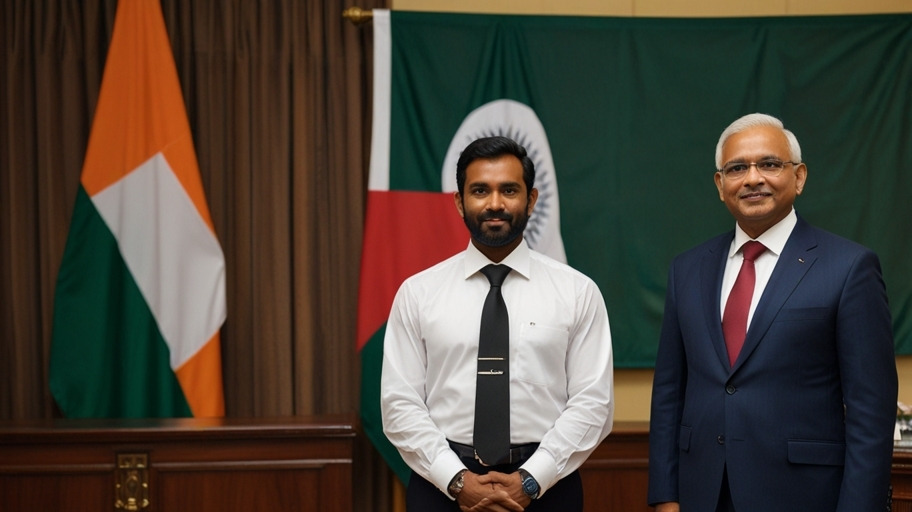
The Maldives' ability to maintain a careful balance between India and China will be crucial in ensuring its political independence, economic growth, and security. As both India and China vie for influence in the Indian Ocean, the Maldives will need to skillfully manage its relationships with these regional giants, leveraging their strengths to bolster its development while safeguarding its sovereignty and strategic interests.
In conclusion, the Maldives' foreign relations, particularly with India and China, offer a compelling case of small-state diplomacy in a complex and competitive international environment. As it navigates this intricate web of relationships, the Maldives must continue to make strategic choices that serve its long-term national interests, all while maintaining strong ties with two of the world's most powerful nations