Maldives' Transition to a Carbon-Neutral Economy: Challenges and Opportunities
The Maldives, a paradisiacal nation known for its pristine beaches, crystal-clear waters, and vibrant marine life, is at the frontline of the global climate crisis. As the planet grapples with the existential threat posed by climate change, the Maldives stands as one of the most vulnerable countries, with rising sea levels threatening its very existence. In response, the Maldivian government has committed to transitioning to a carbon-neutral economy, with a goal to achieve this by 2030. This transition, while ambitious, offers both significant challenges and opportunities for the nation as it seeks to balance environmental sustainability with economic growth.
The Climate Context: A Nation at Risk
The Maldives, an archipelago of 1,192 islands spread across the Indian Ocean, has an average ground elevation of just 1.5 meters above sea level. This makes it one of the lowest-lying countries on Earth, placing it at extreme risk from rising sea levels. The Intergovernmental Panel on Climate Change (IPCC) has projected that sea levels could rise by up to one meter by 2100 if current carbon emission trends continue. For the Maldives, this could mean widespread coastal erosion, loss of habitat, and, in the worst -case scenario, submergence of entire islands
.
In addition to rising sea levels, the Maldives is also vulnerable to other climate-related impacts, such as coral bleaching, ocean acidification, and more frequent extreme weather events like storms and floods. The Maldives' economy, heavily reliant on tourism and fishing, is intrinsically linked to its natural environment. As coral reefs degrade and marine ecosystems suffer, both industries are under significant threat, potentially leading to economic instability and loss of livelihoods for the Maldivian population.
Given this context, the Maldives has a strong incentive to lead by example in the global fight against climate change. The nation's carbon-neutral pledge is not only a matter of environmental responsibility but also a critical step in ensuring its long-term survival.
Maldives' Carbon-Neutral Commitment: The Path Forward
In 2009, then-President Mohamed Nasheed announced an ambitious plan to make the Maldives carbon-neutral by 2020, a pledge that garnered international attention and established the country as a leader in climate action. While the 2020 goal was not achieved, the Maldives remains committed to achieving carbon neutrality by 2030. This goal aligns with the broader global targets outlined in the Paris Agreement, where countries pledged to limit global warming to below 2°C, with an aspiration to limit the temperature rise to 1.5°C.
To achieve carbon neutrality, the Maldives must significantly reduce its carbon emissions and transition to renewable energy sources. Currently, the country relies heavily on imported diesel for electricity generation, contributing to a high per capita carbon footprint. The Maldives consumes an estimated 1.4 million barrels of oil annually, primarily for energy generation and transportation. The shift to renewable energy, particularly solar power, is at the heart of the Maldives' carbon-neutral strategy.
Renewable Energy Potential: Opportunities for Growth
One of the key opportunities for the Maldives in its transition to a carbon-neutral economy lies in its abundant renewable energy potential. The Maldives enjoys year-round sunshine, making solar power a particularly attractive option for energy generation. According to the Asian Development Bank (ADB), the country has the potential to generate over 6,000 GWh of electricity annually through solar photovoltaic (PV) installations, which far exceeds its current electricity demand of around 500 GWh.
Several initiatives are already underway to harness the Maldives' solar potential. The Scaling Up Renewable Energy Program (SREP) has been instrumental in promoting solar PV installations on the islands. The program, supported by international organizations such as the World Bank and the ADB, aims to reduce the country's dependence on diesel generators and lower its carbon emissions. In addition to solar power, there is also potential for other forms of renewable energy, such as wind and ocean energy, though these are less developed due to the country's geographic and Logistical challenges.
The Maldives has also the use of renewable energy in its tourism sector, which is responsible for a significant portion of the nation's carbon emissions. Many resorts have explored adopting solar power and energy-efficient technologies as part of their sustainability initiatives. The development of eco-resorts and the promotion of green tourism practices can help reduce the carbon footprint of the tourism industry while attracting environmentally conscious travelers.
Challenges in the Transition to Carbon Neutrality
While the Maldives has significant renewable energy potential, its transition to a carbon-neutral economy is fraught with challenges. One of the primary obstacles is the country's heavy dependence on imported diesel for energy generation and transportation. The infrastructure for renewable energy is still in its early stages, and there are significant financial and technical barriers to scaling up renewable energy projects.
1. Financial Constraints
The transition to a carbon-neutral economy requires substantial financial investment, particularly in the development of renewable energy infrastructure. The Maldives, like many small island developing states (SIDS), faces significant financial constraints, including high levels of debt and limited access to capital markets. The upfront costs of installing solar panels, wind turbines, and other renewable energy technologies can be prohibitively expensive for a country with limited resources.
To overcome these financial barriers, the Maldives will need to attract international funding and investment. The country has already received support from international organizations such as the United Nations Development Program (UNDP), the World Bank, and the ADB, which have provided grants and loans for renewable energy projects. However, scaling up these efforts will require sustained financial support from the international community, including access to climate finance mechanisms such as the Green Climate Fund.
2. Technical and Logistical Challenges
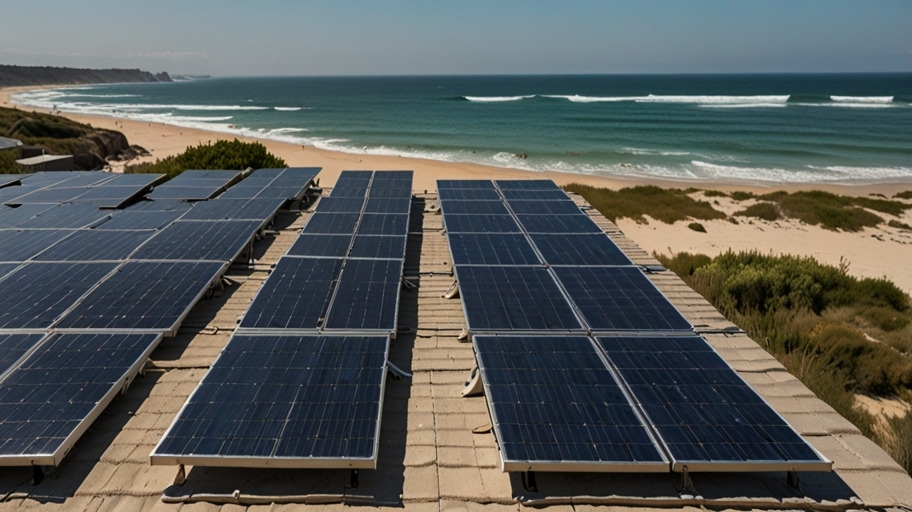
The Maldives' unique geography presents significant logistical challenges for the development of renewable energy infrastructure. The islands are scattered across a vast area of the Indian Ocean, making it difficult to establish a centralized power grid. Instead, each island typically relies on its own diesel generator for electricity, which complicates the process of transitioning to renewable energy. Decentralized solar power systems, such as rooftop solar panels, offer a potential solution, but their installation and maintenance require technical expertise and resources that are currently limited in the Maldives.
Another technical challenge is the storage and distribution of renewable energy. Solar power generation is intermittent, and energy storage systems, such as batteries, are necessary to ensure a stable supply of electricity. However, the cost of energy storage technologies remains high, and there is limited experience with these systems in the Maldives. Investing in research and development to improve the efficiency and affordability of energy storage will be crucial for the country's transition to a carbon-neutral economy.
3. Economic Diversification
The Maldives' economy is heavily dependent on tourism, which accounts for over 30% of its GDP and employs a significant portion of the population. While tourism is a major source of revenue, it also contributes to the country's carbon emissions, particularly through air travel and energy consumption at resorts. To achieve carbon neutrality, the Maldives will need to diversify its economy and reduce its reliance on carbon-intensive industries.
One potential avenue for economic diversification is the development of a blue economy, which focuses on sustainable use of ocean resources for economic growth, improved livelihoods, and ocean ecosystem health. The Maldives has abundant marine resources, including fisheries and aquaculture, which could be harnessed for economic development while promoting environmental sustainability. The blue economy concept aligns with the country's carbon-neutral goals and offers opportunities for job creation and income generation in sectors such as marine tourism, renewable ocean energy, and sustainable fisheries.
Opportunities for International Collaboration
The Maldives' transition to a carbon-neutral economy offers significant opportunities for international collaboration. As a small island developing state, the Maldives has been a vocal advocate for climate action on the global stage, calling for greater ambition from major carbon-emitting countries and increased support for vulnerable nations.
One of the key opportunities for international collaboration is through climate finance mechanisms, such as the Green Climate Fund and the Global Environment Facility. These funds provide financial assistance to developing countries to help them implement climate mitigation and adaptation projects. The Maldives have already benefited from These mechanisms, but there is potential for further collaboration to support the country's renewable energy transition and climate resilience efforts.
In addition to financial support, international partnerships can also provide technical assistance and capacity-building to help the Maldives overcome the technical challenges associated with renewable energy development. Countries with experience in renewable energy technologies, such as solar and wind power, can share their expertise and provide training to Maldivian engineers and technicians. International organizations and research institutions can also play a role in advancing research and development in areas such as energy storage and grid integration.

Conclusion: A Path Toward Sustainability
The Maldives' transition to a carbon-neutral economy is a bold and necessary step in the face of the existential threat posed by climate change. While the challenges are significant, the opportunities for growth, innovation, and international collaboration are equally compelling. By harnessing its renewable energy potential, diversifying its economy, and engaging with the international community, the Maldives can set a powerful example for other small island nations and the world at large.
Achieving carbon neutrality by 2030 will require concerted efforts from the Maldivian government, private sector, and civil society, as well as sustained support from the global community. As the Maldives charts its path toward sustainability, it has the potential to not only protect its own future but also contribute to the global fight against climate change, inspiring others to take bold action in the pursuit of a more sustainable and resilient world.