Maldives' Role in Global Climate Negotiations and Advocacy
The Maldives, a small island nation in the Indian Ocean, has garnered global attention in recent decades for its remarkable contributions to international climate negotiations and advocacy. As one of the countries most vulnerable to the impacts of climate change, the Maldives has become a powerful voice in raising awareness about the existential threats posed by global warming, particularly for small island developing states (SIDS) and low-lying coastal nations. Over the years, the Maldives has assumed a leadership role in global climate diplomacy, working tirelessly to influence policy , advocate for ambitious climate action, and push for the protection of vulnerable communities.
1. The Maldives' Unique Vulnerability to Climate Change
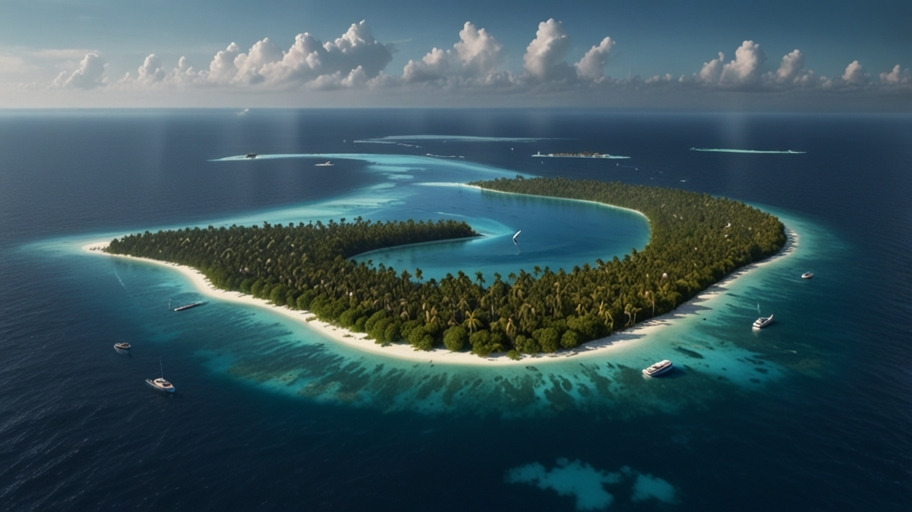
The Maldives is an archipelago of around 1,200 coral islands, with more than 80% of its land area situated less than one meter above sea level. This geographic feature makes the nation extremely susceptible to the consequences of rising sea levels. Projections from climate scientists suggest that if current trends in global warming continue, the Maldives could be submerged within a century. Beyond rising sea levels, the country also faces threats such as ocean acidification, increased frequency of storms, coastal erosion, and damage to its coral reefs, which are vital to the nation's economy and environmental health.

For a country whose primary economic sectors include tourism and fisheries—both of which depend on the health of the natural environment—climate change is not just an environmental issue; it is a matter of survival. The vulnerability of the Maldives to climate change has driven the country to assume an active role in global climate discussions, where it has become a leading advocate for stronger international action on climate change mitigation and adaptation.
2. Early Advocacy and the Maldives' Diplomatic Leadership
The Maldives' journey in climate diplomacy began in the late 1980s, when the government, under then-President Maumoon Abdul Gayoom, became one of the first to bring international attention to the potential consequences of climate change for low-lying nations. In 1987, following severe flooding that inundated much of the capital, Male, Gayoom addressed the United Nations General Assembly (UNGA), calling for urgent global action to combat climate change. His speech is often credited with being among the earliest and most influential calls for a global response to what was, at the time, still a relatively unknown issue.
In the years that followed, the Maldives continued to champion the cause of vulnerable nations in international climate forums. The country was instrumental in the establishment of the Alliance of Small Island States (AOSIS) in 1990, a coalition of low-lying and island countries that seeks to promote the interests of SIDS in climate change negotiations. AOSIS has played a crucial role in shaping the global climate agenda, pushing for greater ambition in international agreements and advocating for the specific needs of island nations.
The Maldives' leadership in climate advocacy was further cemented in 2008 with the election of President Mohamed Nasheed, a passionate and charismatic environmental advocate. Nasheed gained global recognition for his efforts to draw attention to the Maldives' plight, using creative and symbolic actions to highlight the urgency of the climate crisis. In 2009, ahead of the United Nations Climate Change Conference in Copenhagen (COP15), Nasheed held an underwater cabinet meeting, with ministers donning scuba gear to sign a document calling for global emission reductions. This highly publicized event underscored the existential threat facing the Maldives and helped galvanize international support for stronger climate action.
3. The Maldives' Role in International Climate Negotiations
Throughout its history of climate advocacy, the Maldives has been a consistent and vocal participant in international climate negotiations, particularly in the context of the United Nations Framework Convention on Climate Change (UNFCCC) and the annual Conference of the Parties (COP) meetings. Maldives has used these platforms to advocate for a range of issues, including:
a. Ambitious Emission Reduction Targets: The Maldives has been a strong proponent of limiting global temperature rise to 1.5°C above pre-industrial levels, a target that is seen as essential to the survival of low-lying island nations. During COP21 in Paris in 2015, the Maldives, along with AOSIS, played a key role in ensuring that the 1.5°C target was included in the Paris Agreement as an aspirational goal, even as many larger nations were advocating for a 2°C target. The inclusion of the 1.5°C target represented a significant victory for SIDS, as it acknowledged the specific vulnerabilities of these nations and the disproportionate impact they face from climate change.
b. Loss and Damage: The concept of loss and damage refers to the irreversible impacts of climate change that cannot be avoided through mitigation or adaptation efforts, such as sea-level rise leading to the loss of entire communities. The Maldives has been at the Forefront of advocating for a global mechanism to address loss and damage, recognizing that many vulnerable nations lack the resources to cope with these devastating impacts. While progress has been slow, the Maldives and its allies have succeeded in making loss and damage a central issue in climate negotiations, leading to the establishment of the Warsaw International Mechanism for Loss and Damage in 2013.
c. Climate Finance: Securing adequate financial resources for adaptation and mitigation efforts is crucial for the Maldives and other vulnerable nations. The Maldives has been a strong advocate for increasing climate finance, particularly for adaptation measures, as these nations are often the least responsible for global greenhouse gas emissions but are among the most affected by climate change. The Maldives has pushed for developed countries to fulfill their commitments to provide $100 billion annually in climate finance, a pledge made in the Paris Agreement, and has called for mechanisms that ensure equitable access to these funds for the most vulnerable nation
s.
d. Ocean Conservation and Blue Economy: As a nation highly dependent on the health of its marine ecosystems, the Maldives has championed the inclusion of ocean conservation and the blue economy in climate discussions. The country has worked to highlight the link between climate change and the degradation of marine ecosystems, advocating for greater international action to protect coral reefs, combat ocean acidification, and promote sustainable use of marine resources. The Maldives has also been a leading voice in pushing for the integration of blue economy principles into global climate and development frameworks, recognizing the potential for sustainable ocean-based economic activities to contribute to both climate resilience and economic growth.
4. The Maldives' Domestic Climate Actions
While the Maldives has been a prominent advocate on the global stage, it has also made significant efforts at the domestic level to address the impacts of climate change and reduce its own carbon footprint. Recognizing the importance of leading by example, the Maldives has set ambitious goals for renewable energy, conservation, and climate adaptation.
a. Renewable Energy and Carbon Neutrality: In 2009, President Nasheed announced the Maldives' goal of becoming carbon-neutral by 2020, one of the most ambitious climate pledges made by any country at the time. While the country faced significant challenges in achieving this target, the pledge underscored the Maldives' commitment to reducing its reliance on fossil fuels and transitioning to renewable energy sources. The Maldives has since made progress in increasing its use of solar power, with several projects aimed at expanding renewable energy capacity across the islands.
b. Adaptation and Resilience Building: Given its vulnerability to rising sea levels and extreme weather events, the Maldives has invested heavily in adaptation measures to protect its population and infrastructure. The country has implemented coastal protection projects, such as the construction of sea walls and artificial islands, to safeguard against erosion and flooding. additionally, the Maldives has developed comprehensive national adaptation plans, which include initiatives to improve water security, enhance food production, and protect biodiversity.
c. Environmental Conservation: The Maldives has taken steps to protect its unique ecosystems, particularly its coral reefs, which are vital to both the country's economy and its resilience to climate change. In 2011, the Maldives established one of the largest protected marine areas in the Indian Ocean, banning fishing and other destructive activities in a significant portion of its territorial waters. The government has also promoted sustainable tourism practices and supported community-based conservation efforts to preserve the country's natural heritage.
5. Challenges and Future Outlook
Despite its leadership in global climate advocacy and its domestic efforts to address climate change, the Maldives continues to face significant challenges. The country remains highly vulnerable to rising sea levels and other climate-related impacts, and its ability to adapt is constrained by limited financial and technical resources. additionally, political instability and economic dependence on tourism make it difficult for the Maldives to fully implement its climate goals.
On the international stage, the Maldives and other SIDS face the challenge of ensuring that their voices are heard in a global climate regime that is often dominated by larger, more powerful nations. While the Maldives has been successful in raising awareness about the plight of vulnerable nations, translating this awareness into concrete action remains a challenge, particularly as major emitters continue to fall short of their emission reduction commitments.
Looking ahead, the Maldives will need to continue its dual approach of advocating for stronger international climate action while simultaneously implementing robust domestic adaptation and mitigation measures. Strengthening regional cooperation, securing access to climate finance, and fostering innovation in renewable energy and sustainable development will be key to the country's future resilience.
Conclusion
The Maldives' role in global climate negotiations and advocacy is a legacy to the power of small nations to influence international policy and drive meaningful action on critical global issues. As one of the most vulnerable countries to the impacts of climate change, the Maldives has become a leading voice in calling for urgent, ambitious climate action, advocating for the protection of vulnerable communities, and promoting a sustainable future for all. Through its leadership in forums like the UNFCCC, its participation in AOSIS, and its domestic climate initiatives, the Maldives has demonstrated that even the smallest nations can play a significant role in shaping the global climate agenda